What Does The Rise of Mobile Wallets Mean For Your Business?

Mobile wallets are quickly becoming one of the most popular ways for customers to pay in the UK. Services such as Apple Pay and Google Pay allow people to store their debit and credit cards on their phone and pay simply by tapping their device at the till. What started as a convenient alternative payment option has now become a normal part of everyday spending.
For businesses, this shift is important. The way customers prefer to pay is changing, and businesses that keep up with those changes are more likely to provide the smooth, modern payment experience customers expect.

Mobile Wallets Are Growing Fast

Recent data shows just how quickly mobile wallets have become part of everyday life in the UK. More than half of UK adults now use a mobile wallet, with adoption rising from around 42% in 2023 to approximately 57% in 2024. This rapid growth shows that mobile payments are moving from being a niche option to a mainstream way to pay.
Regular use is also increasing. Around half of the UK population now uses mobile payments at least once a month, highlighting how comfortable consumers have become with using their phones to complete everyday purchases.
This trend is closely linked to the continued rise of contactless payments. In the UK, contactless now accounts for over 60% of all card transactions. Customers have become used to simply tapping their card or phone, and many now see this as the easiest and fastest way to pay.
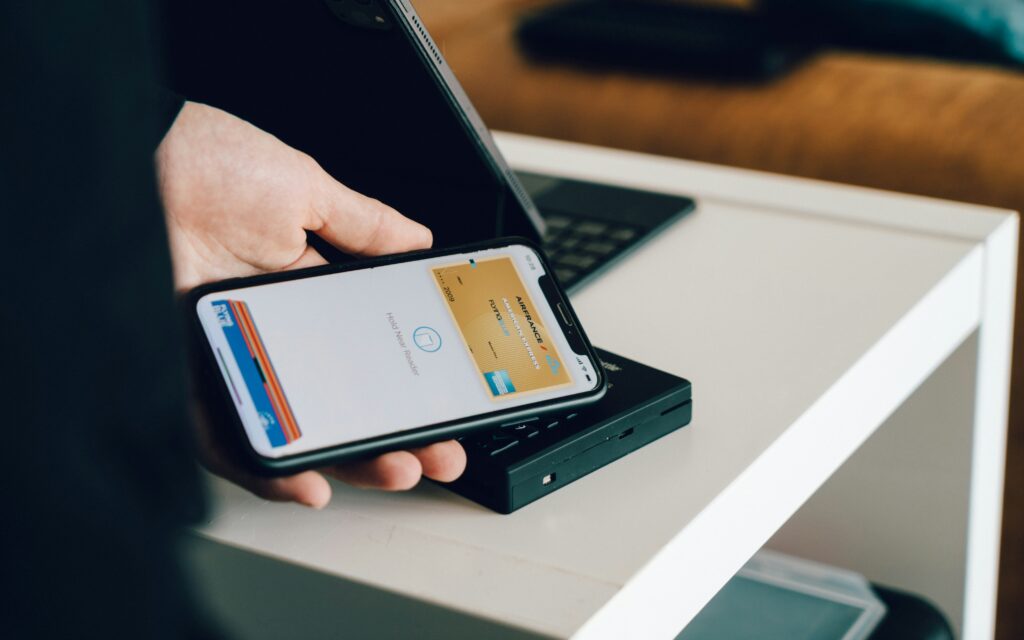
customer tapping phone to pay representing mobile wallets

Apple Pay and Google Pay Lead The Way

Two of the most widely used mobile wallet services in the UK are Apple Pay and Google Pay. Both allow customers to add their debit and credit cards to their smartphone and make contactless payments wherever contactless terminals are accepted.
Apple Pay is particularly popular among iPhone users and is now supported by most major UK banks. Once a card is added to the wallet, customers can pay in shops by simply holding their phone or Apple Watch near the card reader and confirming the payment using Face ID, Touch ID or a passcode.
Google Pay offers a very similar experience for Android users. Customers can add their cards to the Google Wallet app and make quick contactless payments using their smartphone or smartwatch. Google Pay is also widely accepted and works with most contactless payment terminals.
For customers, these services make payments quick and convenient. Instead of searching for a wallet or card, they can simply use the phone they already have in their hand. This convenience is one of the key reasons mobile wallet adoption continues to grow.

Why Customers Prefer Mobile Payments

There are several reasons mobile wallets have become so popular. One of the main drivers is convenience. Many people now leave home carrying only their phone, knowing they can pay for transport, shopping and food without needing their physical cards.
Mobile payments are also extremely fast. Paying with a phone or smartwatch usually takes only a few seconds, which helps reduce queues and keeps transactions moving smoothly during busy periods.
Security is another important factor. Mobile wallets use advanced security features such as encryption and tokenisation, meaning the customer’s actual card details are not shared during the transaction. Payments are also often verified using fingerprint or facial recognition, which adds an extra layer of protection.
For many customers, this combination of speed, simplicity and security makes mobile payments an attractive option.

What This Means For Businesses

For businesses, the rise of mobile wallets creates both opportunities and expectations.
  • Offering mobile wallet payments can improve the customer experience. Customers increasingly expect to pay the way they prefer, and if that option is not available it can cause frustration at the checkout.

  • Faster transactions can improve efficiency. Tap-to-pay methods reduce the time spent processing payments, which can help keep queues moving and improve service during busy periods.

  • Mobile wallets can also encourage impulse purchases. When paying is quick and simple, customers are less likely to hesitate before completing a purchase.

  • Businesses that support mobile payments also signal that they are keeping up with modern payment habits. In a competitive market, providing a smooth and convenient checkout experience can make a real difference to customer satisfaction.

For businesses, the key is making sure payment systems are ready to support these methods. Most modern card terminals already accept mobile wallets, as they operate through the same contactless technology used by debit and credit cards.
By accepting mobile wallets alongside traditional card payments, businesses can ensure customers always have a quick and convenient way to pay.
As payment habits continue to evolve, offering flexible and modern payment options is no longer just a bonus feature. It is becoming an essential part of running a successful business.