
Sustainability is no longer a niche concern. It’s shaping how people shop, how businesses operate, and increasingly, how payments are made.
Recent research highlights a growing shift – particularly among Gen Z consumers – towards the circular economy. Unlike the traditional “take, make, dispose” model, the circular economy focuses on keeping products and materials in use for as long as possible through reuse, repair, resale, and regeneration.
For businesses, this isn’t just an environmental movement. It’s a commercial opportunity. And at the centre of it all? Smart, flexible payment systems.
What Is the Circular Economy?
The circular economy is a model designed to move away from the traditional “take, make, dispose” system. Instead of extracting raw materials, producing goods, and eventually discarding them as waste, the circular model focuses on keeping products and materials in use for as long as possible.
This includes reusing packaging, repairing products instead of replacing them, reselling pre-owned items, and incentivising returns through deposit schemes. The goal is to reduce waste, maximise resources, and create regenerative loops where products continuously re-enter the economy rather than ending up in landfill.
For businesses, this isn’t simply about environmental responsibility. It introduces new revenue streams, deeper customer engagement, and long-term cost efficiencies. However, it also changes how transactions work — often requiring deposits, refunds, store credit, micro-payments, and digital tracking.
Below are the key circular economy models gaining traction, along with the brands already putting them into practice.

Refill and Recycling Reward Schemes
One of the most accessible entry points into the circular economy is through refill and recycling reward initiatives. These schemes encourage customers to return used packaging or refill existing containers rather than purchasing new single-use products.
By combining sustainability with financial incentives — such as loyalty points or discounts — brands create a closed loop that drives repeat visits while reducing waste.
Boots Recycling Scheme
Boots has introduced a beauty recycling programme that rewards customers with Advantage Card points when they return empty skincare and cosmetic packaging. Customers register their returns through an app, drop items into dedicated bins in-store, and receive points to redeem on future purchases.
This model not only supports responsible disposal but also increases customer retention. From a payments perspective, it relies on seamless loyalty integration and smooth redemption at checkout to ensure the reward feels instant and worthwhile.
The Body Shop Refill Stations
The Body Shop has launched refill stations in selected stores, allowing customers to reuse aluminium bottles for products such as shampoo and shower gel. Customers pay only for the refill, reducing packaging waste and long-term material use.
For retailers, this requires flexible POS systems capable of handling refill pricing structures and loyalty incentives without disrupting the customer journey.
Lush “Bring It Back” Scheme
Lush rewards customers who return empty product containers with money off their next purchase or a free product after a set number of returns. The simplicity of the offer is key — customers know immediately what they gain from participating.
Applying these rewards quickly at checkout is essential. If the process is slow or manual, the incentive loses impact.
Deposit and Return Models
Deposit systems take circular behaviour one step further by introducing financial accountability. Customers pay a small deposit upfront and receive it back once the reusable item is returned.
These models are particularly effective because they make sustainability financially neutral — or even beneficial — for the consumer.
Costa Coffee Borrow Cup Scheme
Costa has trialled a borrow-and-return cup scheme where customers pay a small deposit when taking a reusable cup and receive it back when they return it.
The success of this system depends on how effortlessly refunds are processed. Instant card refunds or app-based reimbursements remove friction and increase participation rates.
Starbucks Reusable Cup Programmes
Starbucks has implemented reusable cup initiatives in multiple regions, integrating deposits and refunds within its app ecosystem. Customers borrow a cup, return it, and receive a digital refund or loyalty incentive.
By embedding deposits and refunds within its digital payment environment, Starbucks ensures the process feels seamless rather than transactional.
CupClub
CupClub partners with cafés, offices and venues to operate a fully returnable cup system. Customers scan a QR code when borrowing a cup and return it to a smart bin for washing and redistribution.
If cups are not returned within a set timeframe, customers are automatically charged — highlighting how secure payment systems and automated micro-transactions underpin the model.

Bottle Deposit Return Schemes
On a larger scale, national and retailer-led bottle return schemes are reshaping grocery retail. These systems apply a small deposit to drinks containers, refundable when returned to a collection machine.
They are designed to normalise recycling behaviour by making it financially worthwhile.
Tesco Reverse Vending Trials
Tesco has trialled reverse vending machines in stores where customers return plastic bottles and receive vouchers to spend in-store.
The value of the voucher may be small, but the operational efficiency behind it is significant. POS systems must accept and process these credits quickly to avoid slowing checkout queues.
Lidl Deposit Return Machines
Lidl has also introduced bottle return machines in pilot stores, offering money-off coupons when customers recycle containers.
At supermarket scale, managing thousands of micro-refunds daily requires reliable and integrated payment infrastructure.
Resale and Trade-In Programmes
Resale and buy-back initiatives are transforming how retailers view product lifecycle. Instead of focusing solely on new sales, brands are actively encouraging customers to return pre-owned goods for refurbishment and resale.
This not only reduces waste but creates new circular revenue streams.
Patagonia’s Worn Wear
Patagonia’s Worn Wear programme allows customers to trade in used clothing for store credit. Items are repaired and resold, extending their lifespan.
Store credit systems must be secure, trackable and easy to redeem — otherwise the incentive loses value.
IKEA Buy-Back Scheme
IKEA offers customers vouchers in exchange for returned furniture, which is then resold in dedicated circular hubs within stores.
This requires systems capable of issuing and redeeming vouchers both online and in-store without friction.
Levi’s SecondHand
Levi’s operates a resale platform where customers trade in denim for gift cards. Items are refurbished and sold online.
Here, ecommerce payments, gift cards and resale logistics must work seamlessly together.
Decathlon Buy-Back
Decathlon allows customers to return used sports equipment in exchange for store vouchers, with products refurbished and resold at lower prices.
Valuation systems, voucher processing and POS integration all rely on adaptable merchant technology.
Repair and Product Life Extension Services
Repair is becoming commercially viable again as consumers seek to extend product life rather than replace items prematurely.
For many brands, this represents a shift from pure retail sales to hybrid service models.
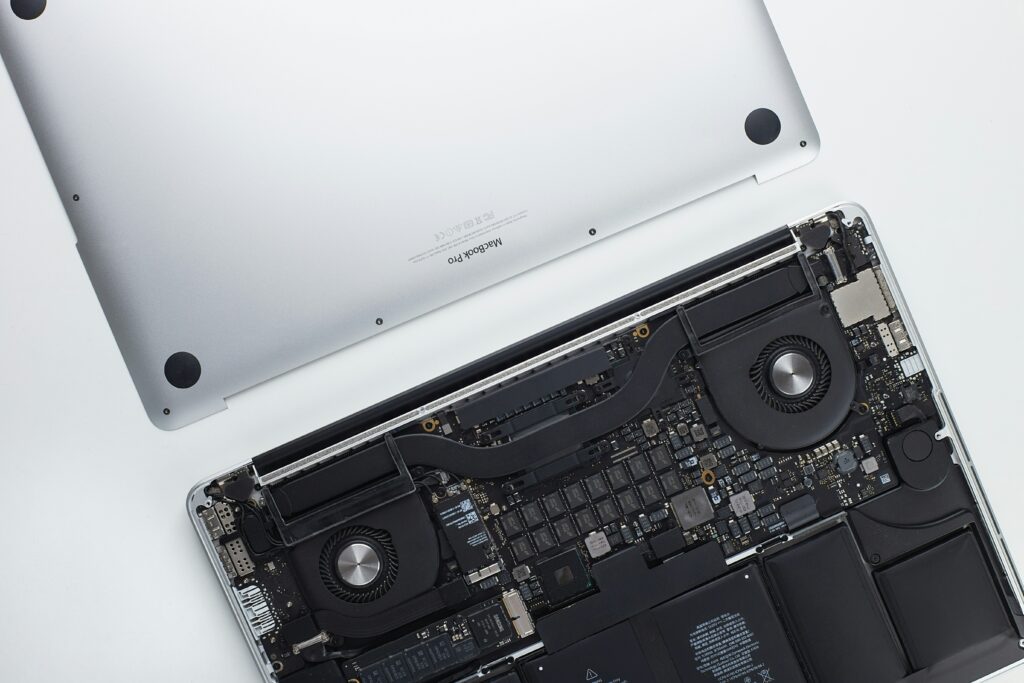
Apple Self-Service Repair
Apple allows customers to purchase official parts and tools to repair their devices. This supports product longevity while maintaining brand standards.
Handling component-based purchases and flexible payment options is key to making repair accessible.
Outdoor Brand Repair Initiatives
Brands such as Patagonia and The North Face offer repair services to extend garment life. This adds a service-based revenue stream alongside traditional retail.
Flexible payment options — including remote billing or deposits — help make these services commercially efficient.
Why Payment Infrastructure Is Central to Circular Success
Circular economy models introduce more complex transaction journeys than traditional retail. Deposits must be processed, refunds issued instantly, vouchers redeemed, and loyalty rewards applied seamlessly.
If sustainable choices feel inconvenient, customers revert to disposable alternatives.
With the right merchant solutions in place, however, businesses can reduce costs, increase repeat visits, and strengthen brand loyalty — while supporting more responsible consumption.